What Is an Exchange Rate Markup? Hidden Fees Explained
Learn how exchange rate markups work, how providers profit from the spread between mid-market and offered rates, and how to compare the true cost of sending money.
Typical markup
1-4%
Mid-market rate source
Reuters / XE
Global avg. remittance cost
6.35%
UN cost target
3%
What Is an Exchange Rate Markup?
An exchange rate markup is the difference between the real exchange rate on global currency markets and the rate a money transfer provider actually offers you. It is one of the most common — and least visible — costs in international money transfers.
Every time you send dollars and the recipient receives a different currency, someone converts those dollars at an exchange rate. Providers rarely give you the true market rate. Instead, they add a margin — the markup — and pocket the difference. According to the World Bank’s Remittance Prices Worldwide database, exchange rate margins account for roughly one-third of total remittance costs globally. On the current global average cost of 6.35%, that means about 2% of every transfer disappears into exchange rate markups alone.
This matters because markups are the cost most people never see. A provider can advertise “a 0.5% fee” while quietly offering you an exchange rate that is 3% worse than the real one. The result: you pay more, and the recipient gets less.
Mid-Market Rate vs. Provider Rate: Understanding the Gap
The mid-market rate — also called the interbank rate — is the midpoint between the buy and sell prices of any two currencies on the global foreign exchange market. It is the rate banks use when trading large volumes with each other. You can see it on Google Finance, XE, or Reuters at any time.
When a provider quotes you an exchange rate for a money transfer, they almost never give you this mid-market rate. Instead, they shift the rate in their favor. If the mid-market rate for USD to Mexican pesos is 17.00, a provider might offer you 16.50. That 0.50 peso difference on every dollar is the markup — and it is pure profit for the provider.
Here is how the math works on a $500 transfer at the mid-market rate versus a typical marked-up rate:
| Mid-market rate | Provider rate (3% markup) | |
|---|---|---|
| USD to MXN rate | 17.00 | 16.49 |
| Pesos received | 8,500 | 8,245 |
| Hidden cost | $0 | ~$15 |
That $15 difference does not appear as a “fee” on any receipt. The provider simply gives fewer pesos per dollar. Over twelve monthly transfers, this single markup costs $180 per year — money that never reaches the recipient.
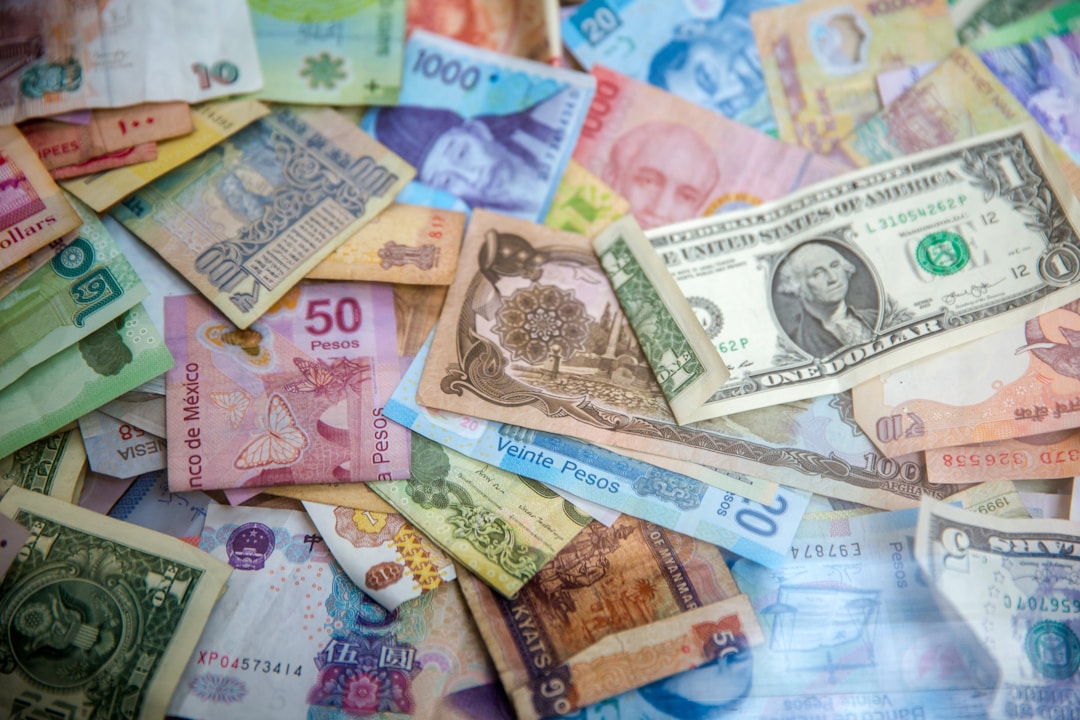
Photo by Maxim Hopman on Unsplash
How to Spot an Exchange Rate Markup
Identifying a markup takes less than a minute. Before confirming any transfer, follow these steps:
- Check the live mid-market rate. Search “USD to [currency]” on Google or visit XE.com. Note the current rate.
- Compare it to the provider’s offered rate. Most services show you their exchange rate before you confirm the transfer. Place the two numbers side by side.
- Calculate the percentage difference. Subtract the provider’s rate from the mid-market rate, divide by the mid-market rate, and multiply by 100. That percentage is the markup.
- Add any flat fees. The total cost of the transfer is the markup percentage plus any stated fee, divided by the amount you send.
For example, if the mid-market rate is 17.00 MXN per dollar and the provider offers 16.49, the markup is (17.00 - 16.49) / 17.00 = 3%. If the provider also charges a $5 flat fee on a $500 transfer (1%), the true total cost is about 4%.
Some providers make this comparison difficult on purpose. They may not show you the exchange rate until after you pay, or they display the rate in a format that is hard to compare. Transparency — or the lack of it — tells you a lot about a provider.
Typical Markup Percentages by Provider Type
Not all transfer services apply the same margins. Markups vary widely depending on the provider, the corridor, and the currencies involved. Research from the World Bank Remittance Prices Worldwide database and Wise’s cost comparison data shows consistent patterns:
| Provider type | Typical markup | Typical flat fee | Total cost range |
|---|---|---|---|
| Major banks (wire transfer) | 2.5-4% | $25-50 | 5-9% |
| Traditional agents (Western Union, MoneyGram) | 1.5-3% | $5-15 | 3-7% |
| Digital-first services (Wise, Remitly) | 0.4-1.5% | $1-5 | 1-3% |
| Dollar wallet (Arca) | None on transfer | None | Conversion at recipient’s discretion |
A few patterns stand out. Banks tend to apply the highest markups because international transfers are not their core focus — they treat FX margins as easy revenue. Traditional cash-based services use moderate markups but layer on fees at both ends. Digital-first providers have driven markups down by showing users the mid-market rate and charging a transparent, smaller margin instead.
The reasons international transfers cost so much come down to these stacked costs: flat fees, exchange rate markups, correspondent banking charges, and regulatory overhead. When you understand each layer, you can see where your money actually goes.
How to Compare the True Cost of Any Transfer
The only honest way to compare transfer providers is to look at the total cost — the amount the recipient actually receives compared to what you send. Here is a checklist:
- Ignore “zero fee” marketing. A provider with no fee but a 3% exchange rate markup costs more than a provider with a $3 fee and a 0.5% markup on a $300 transfer. Always calculate the total.
- Use the mid-market rate as your baseline. Any rate worse than mid-market is a markup. Period.
- Check the rate at the moment of transfer. Exchange rates move constantly. Compare at the same time, not hours apart.
- Factor in delivery speed. Some providers lock in a rate that expires in minutes; others hold it for hours. A “good” rate that changes before delivery is not a good rate.
- Look at the amount received, not the amount sent. The number that matters is what arrives in the recipient’s wallet or local currency, after every fee and conversion.
Understanding how international money transfers work helps you see why each step adds cost. Every intermediary in the chain — from your provider to correspondent banks to the local payout partner — takes a cut. Fewer intermediaries mean lower costs.
For people sending money regularly — monthly remittances to family, freelance payments, or recurring support — even a 1% difference in exchange rate markup compounds into hundreds of dollars per year. On $300 per month, a 2% markup costs $72 annually. Dropping that markup to zero saves enough for an extra full transfer.
Consider Carlos, who sends $500 every month to his parents in Guadalajara. His traditional provider advertises a $4.99 fee but applies a 2.8% exchange rate markup. Carlos thinks he is paying $5 per transfer — but the markup quietly costs him another $14, bringing the real total to $19 per month. Over a year, that is $228 lost to markups and fees. When Carlos switched to sending digital dollars through a wallet, his parents received the full $500 every time. The $228 difference covered nearly two months of his parents’ grocery bills.

Photo by Carlos Muza on Unsplash
Sending Dollars Without the Markup
The exchange rate markup exists because someone is converting your dollars into another currency on your behalf — and charging you for the privilege. One way to avoid it entirely is to skip the conversion step.
With Arca, you hold digital dollars in a wallet you control. When you send dollars to another person’s wallet, dollars move directly — no intermediary converts them, no provider applies a markup, and no middleman sits in between. The recipient receives exactly the number of dollars you sent.
If the recipient wants local currency, they handle that conversion on their own terms, at a time and rate they choose. This separates the act of sending money from the act of converting it — and puts control back with the people involved, not the transfer provider.
Exchange rate markups are not inevitable. They are a business model. Once you understand how they work, you can choose services that charge transparently — or avoid the conversion entirely by sending dollars directly from your wallet.
Get started with Arca — send dollars directly, no markup, no hidden fees.
Your dollar wallet. No bank needed.
Hold dollars, send them instantly, and manage your money on your terms.
Get started with Arca