What Is Dollarization? Formal, Informal, and Digital Dollarization Explained
Learn what dollarization means, why countries adopt the U.S. dollar, and how digital dollarization is changing how people hold dollars worldwide. Real examples from Ecuador, Argentina, and Nigeria.
Formally dollarized nations
10+ countries
Argentina parallel-market premium (2023 peak)
Over 100%
Digital dollar circulation (2025)
$306 billion
Unbanked adults globally
1.3 billion
What Is Dollarization?
Dollarization is the adoption of the U.S. dollar as a medium of exchange, either alongside or as a complete replacement for a country’s own currency. It is one of the most consequential economic decisions a nation can make, and one of the most common survival strategies for individuals living through currency crises.
The phenomenon is not new. Panama has used the dollar since 1904. But dollarization has accelerated in recent decades, driven by repeated currency collapses across Latin America, Africa, and Southeast Asia. The IMF estimates that dollar-denominated holdings represent more than 40% of all financial activity in many developing economies. What has changed is the form dollarization takes. Alongside formal government adoption and informal cash markets, a third wave, digital dollarization, is reshaping how ordinary people access and hold dollars.
Understanding these three forms of dollarization matters because they affect hundreds of millions of people, from policymakers in Quito to freelancers in Lagos to families in Buenos Aires trying to preserve what they have earned.
Formal Dollarization: When Governments Adopt the Dollar
Formal dollarization occurs when a country officially replaces its national currency with the U.S. dollar. The government declares the dollar the official currency, and the local currency either disappears entirely or is relegated to coins for small transactions.
The most significant modern example is Ecuador. In January 2000, facing annual inflation above 96% and a banking crisis that had wiped out savings across the country, President Jamil Mahuad announced full dollarization. The sucre, Ecuador’s currency for over a century, was exchanged at 25,000 per dollar and phased out. The results were stabilizing: inflation fell from triple digits to single digits within three years, and the economy gradually recovered.
Panama represents the longest-running case. The country has used the dollar alongside its own balboa (pegged at 1:1) since independence in 1904. Panama has never had a central bank in the traditional sense and has experienced consistently lower inflation than its Central American neighbors.
El Salvador took a different path in 2001, dollarizing during a period of relative stability to reduce borrowing costs and attract foreign capital. The Central Reserve Bank of El Salvador maintained the colon-to-dollar exchange rate at 8.75:1, and the dollar became the dominant transaction currency within months.
Other formally dollarized economies include the British Virgin Islands, the Marshall Islands, Micronesia, Palau, and Timor-Leste.
| Country | Year Dollarized | Reason | Outcome |
|---|---|---|---|
| Panama | 1904 | Post-independence stability | Lowest regional inflation for a century |
| Ecuador | 2000 | Hyperinflation, banking collapse | Inflation dropped from 96% to under 3% |
| El Salvador | 2001 | Attract foreign capital, reduce borrowing costs | Lower borrowing costs, but reduced export competitiveness |
| Timor-Leste | 2000 | Post-independence, no existing monetary system | Provided immediate monetary stability |
The trade-off with formal dollarization is sovereignty. A country that adopts the dollar gives up control of its monetary policy. It cannot print money, set borrowing costs, or devalue its currency to boost exports. For nations in crisis, that loss of control is often the point: it forces fiscal discipline and signals stability to markets. But it also means the country must absorb economic shocks without the cushion of independent monetary tools.
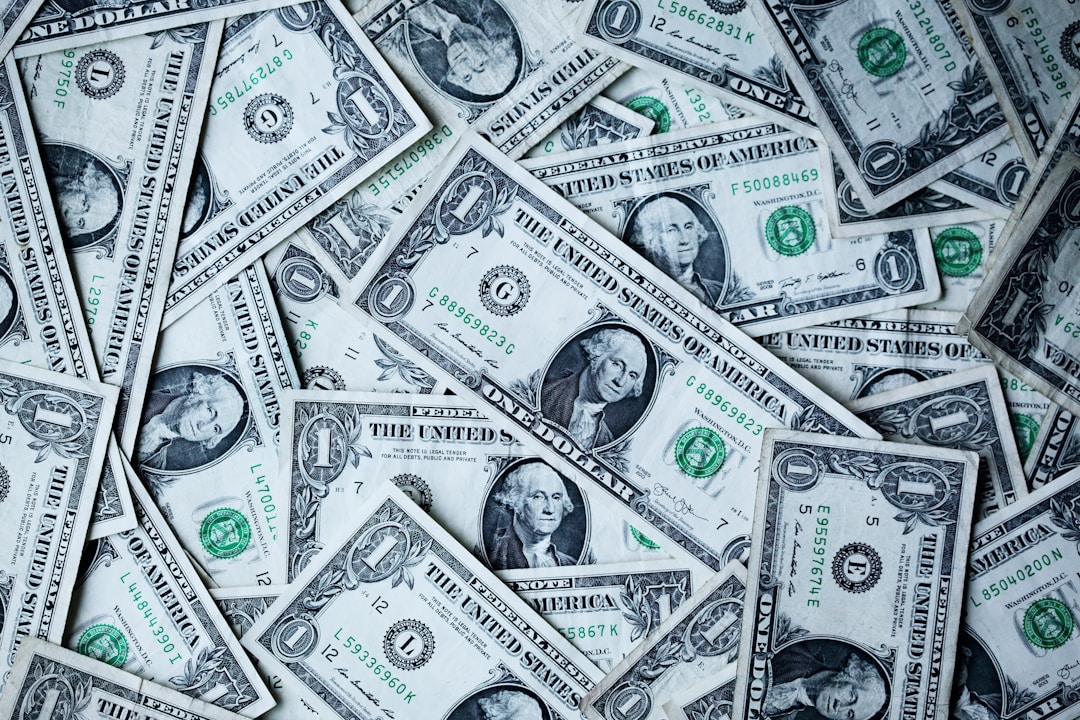
Photo by Alexander Grey on Unsplash
Informal Dollarization: When People Choose the Dollar Themselves
Informal dollarization happens from the bottom up. Citizens, businesses, and institutions voluntarily shift their savings and transactions to dollars, not because the government mandates it, but because they no longer trust the local currency.
Argentina is the world’s most prominent example. Argentines have lived through repeated currency crises (the austral collapse in 1989, the corralito banking freeze in 2001, and chronic peso devaluation throughout the 2010s and 2020s). As a result, Argentina holds an estimated $200 billion in physical U.S. cash outside the United States, more than any other country except the U.S. itself, according to Federal Reserve data cited by Reuters.
The “blue dollar” parallel market became a defining feature of Argentine economic life. When the official exchange rate diverged sharply from reality, Argentines turned to informal currency exchanges (the “cuevas”) where the blue dollar rate reflected true market value. At its peak in late 2023, the blue dollar traded at more than double the official rate, meaning the government’s official peso value was disconnected from what people actually experienced.
Nigeria shows a similar pattern. Despite government efforts to maintain the naira’s value, a thriving parallel dollar market emerged as demand for dollars consistently outstripped official supply. The gap between the official and parallel rates widened throughout 2023 and 2024, with the Central Bank of Nigeria ultimately forced to devalue the naira and unify exchange rates in an effort to close the spread.
Lebanon experienced one of the most extreme cases. After the 2019 financial crisis, the Lebanese pound lost more than 90% of its value. Dollars became the functional currency for everyday transactions (groceries, rent, salaries) while the official rate remained frozen at a fraction of the market price. The country functioned on a cash-dollar economy despite never formally dollarizing.
What these cases share is a common pattern: when local currency devaluation erodes trust, people dollarize themselves, regardless of government policy. They seek dollars because the dollar holds its purchasing power more reliably than a currency experiencing rapid inflation.
Digital Dollarization: The New Wave
The first two forms of dollarization (formal and informal) both rely on physical infrastructure. Governments need monetary agreements and banking system overhauls. Individuals need physical cash, foreign bank relationships, or access to informal exchange networks.
Digital dollarization removes those barriers. It refers to the growing practice of holding U.S. dollars in digital form through a wallet on a smartphone, without needing a U.S. bank, physical cash, or proximity to a currency exchange.
The scale is significant. Digital dollars in circulation reached $306 billion in 2025, with annual transfer volume of $33 trillion. Much of this activity is concentrated in exactly the regions where informal dollarization has traditionally been strongest: Latin America, Sub-Saharan Africa, and Southeast Asia.
What makes digital dollarization different from its predecessors:
| Factor | Informal (Cash) Dollarization | Digital Dollarization |
|---|---|---|
| Access requirement | Physical dollars, exchange house | Smartphone with internet |
| Storage risk | Theft, loss, counterfeits | Digital wallet with personal keys |
| Transfer speed | In person only | Seconds, anywhere globally |
| Transfer cost | Exchange markup (5-15%) | Low fee with wallets like Arca |
| Availability | Limited by physical supply | Unlimited, 24/7 |
| Traceability | None | Full transaction record |

Photo by Firmbee.com on Unsplash
For someone in Buenos Aires, digital dollarization means no longer needing to visit a cueva with an envelope of pesos. For a freelancer in Lagos, it means receiving payment in digital dollars directly into a wallet, without losing value to a parallel-rate conversion. For a family in Beirut, it means holding dollars without hiding physical cash at home.
The GENIUS Act, signed into U.S. law in July 2025, established regulatory standards for digital dollar issuers (reserve requirements, audit transparency, and consumer protections) which has further accelerated this trend by providing a clear legal framework.
Why Dollarization Matters for Everyday People
Dollarization is not just a macroeconomic concept. It has direct, measurable effects on household purchasing power and daily financial decisions.
When a currency loses value, the cost of imports rises: food, fuel, medicine, electronics. Families find that the same salary buys less each month. Savings denominated in the local currency shrink in real terms. This is not abstract: Argentina’s annual inflation exceeded 200% in early 2024, meaning prices roughly tripled in twelve months. Nigeria’s inflation surpassed 33% in 2024, eroding naira-denominated purchasing power steadily.
Dollarization, in any form, is how people respond. A family that holds even a portion of their savings in dollars preserves more of their purchasing power through periods of local currency instability. A freelancer who receives payment in dollars and holds them in a digital dollar wallet avoids the conversion losses built into traditional transfer services, which the World Bank estimates at 6.49% on average for international corridors.
Consider a practical scenario: Sofia works remotely from Quito for a U.S.-based company. She receives $2,000 monthly. Through a traditional international wire, she would pay $25-50 in fees per transfer and wait 1-3 business days. By receiving digital dollars directly into her wallet, she gets the full amount in seconds and decides on her own terms when and how to convert to local currency. Over a year, she keeps hundreds of dollars that would otherwise go to intermediaries.
This is what digital dollarization looks like in practice: not a government decision, not a black-market transaction, but an individual using a tool on their phone to hold dollars on their own terms.
Holding Dollars in the Age of Digital Dollarization
The trajectory is clear. Formal dollarization stabilized economies in crisis. Informal dollarization gave individuals a workaround when their governments could not or would not stabilize their currencies. Digital dollarization makes that same access available to anyone with a smartphone, faster, cheaper, and without the risks of carrying physical cash.
For the 1.3 billion adults worldwide who remain outside the traditional financial system, digital dollarization is not a theoretical improvement. It is the first practical way to hold dollars without the barriers that previously made dollarization dependent on geography, cash availability, or informal networks.
The tools exist today. With Arca, you set up a dollar wallet in 30 seconds, hold dollars you control with your own keys, and send them to anyone else with a compatible wallet, no bank required, no waiting days for settlement.
Ready to hold dollars on your own terms? Get started with Arca, your dollar wallet, set up in 30 seconds.
Your dollar wallet. No bank needed.
Hold dollars, send them instantly, and manage your money on your terms.
Get started with ArcaRelated guides
Are Digital Dollars Safe? An Honest Look at Risks and Safeguards
Digital dollars carry real risks but also real safeguards. Understand reserve backing, regulation, depegging history, and how to evaluate safety before holding digital dollars.
How Digital Dollars Maintain Their Value: Understanding the Safety Behind the Peg
Learn how reserve-backed digital dollars like USDC and USDT maintain their $1 value through audited reserves, the GENIUS Act, and proper custody, plus lessons from past events.
Countries with the Highest Inflation Right Now
Data-driven list of countries with the highest inflation rates in 2026. See what drives rising prices, how citizens cope, and how to protect your purchasing power.