How to Save in Dollars from Argentina
A practical guide for Argentines who want to save in US dollars. Covers the official dollar, MEP dollar, dolar blue, and digital dollar wallets, with real costs, limits, and tradeoffs for 2026.
Argentina inflation (2024)
211%
Peso devaluation (Dec 2023)
54% overnight
MEP dollar brokerage fee
0.5%–1.5%
Digital dollar wallet setup
30 seconds
TL;DR: Argentina’s 211% inflation in 2024 made peso savings nearly worthless. Argentines can save in dollars through four channels: the official market (worst rate after taxes), the MEP dollar (legal, market-driven, requires a brokerage), the dolar blue (best rate but unregulated), or a digital dollar wallet (smartphone-only, 24/7 access, you hold your own keys). Each has tradeoffs in cost, legality, and risk.
Key Takeaways:
- The peso lost more than 99% of its value against the dollar between 2010 and 2024, and 211% inflation in 2024 alone erased two-thirds of peso purchasing power.
- The official dollar channel is fully legal but offers the worst effective rate once taxes and surcharges are included.
- The MEP dollar provides a legal, market-driven alternative through bond transactions, with brokerage fees of 0.5%-1.5%.
- The dolar blue typically has the best rate, but carries counterparty risk, counterfeit exposure, and no legal protection.
- Digital dollar wallets let you hold dollars from a smartphone with no bank or brokerage required, but carry issuer risk and self-custody responsibility.
According to INDEC, Argentina’s consumer prices rose 211% during 2024, one of the highest rates anywhere in the world. Something that cost 1,000 pesos in January cost roughly 3,110 pesos by December. For anyone holding savings in pesos, the math is punishing: your money lost more than two-thirds of its purchasing power in a single year.
This isn’t a new pattern. The peso has lost value against the dollar in nearly every year since the 2001 crisis. For Argentines, saving in dollars isn’t a financial strategy. It’s a survival instinct. The question has never been whether to hold dollars, but how to do it given constantly shifting regulations, multiple exchange rates, and limited access.
This guide covers the four main ways Argentines save in dollars today: the official channel, the MEP dollar, the dolar blue, and digital dollar wallets. With honest costs, limits, and tradeoffs for each.
Disclosure: This guide is published by Arca, a digital dollar wallet provider. We compare all available options honestly, including their drawbacks. Where we reference Arca’s product, this reflects our own service.
Why Argentines Need Dollar Savings
Argentina’s relationship with currency devaluation stretches back decades. The BCRA (Banco Central de la Republica Argentina) data shows the peso lost more than 99% of its value against the dollar between 2010 and 2024.
The most recent shock came in December 2023, when the incoming Milei administration devalued the official exchange rate by 54% overnight, moving it from roughly 400 to 800 pesos per dollar in a single announcement. For anyone holding peso savings, half their dollar-equivalent value disappeared between one day and the next.
A 2023 survey by the Universidad Di Tella found that over 50% of Argentine households reported holding at least some savings in US dollars. The IMF’s 2024 Article IV consultation on Argentina noted that persistent inflation and exchange rate instability have driven widespread informal dollarization, with households and businesses holding an estimated $200 billion to $250 billion in dollar cash outside the formal banking system. Argentina consistently ranks among the countries with the highest inflation, and people have responded by thinking, and saving, in dollars whenever possible.
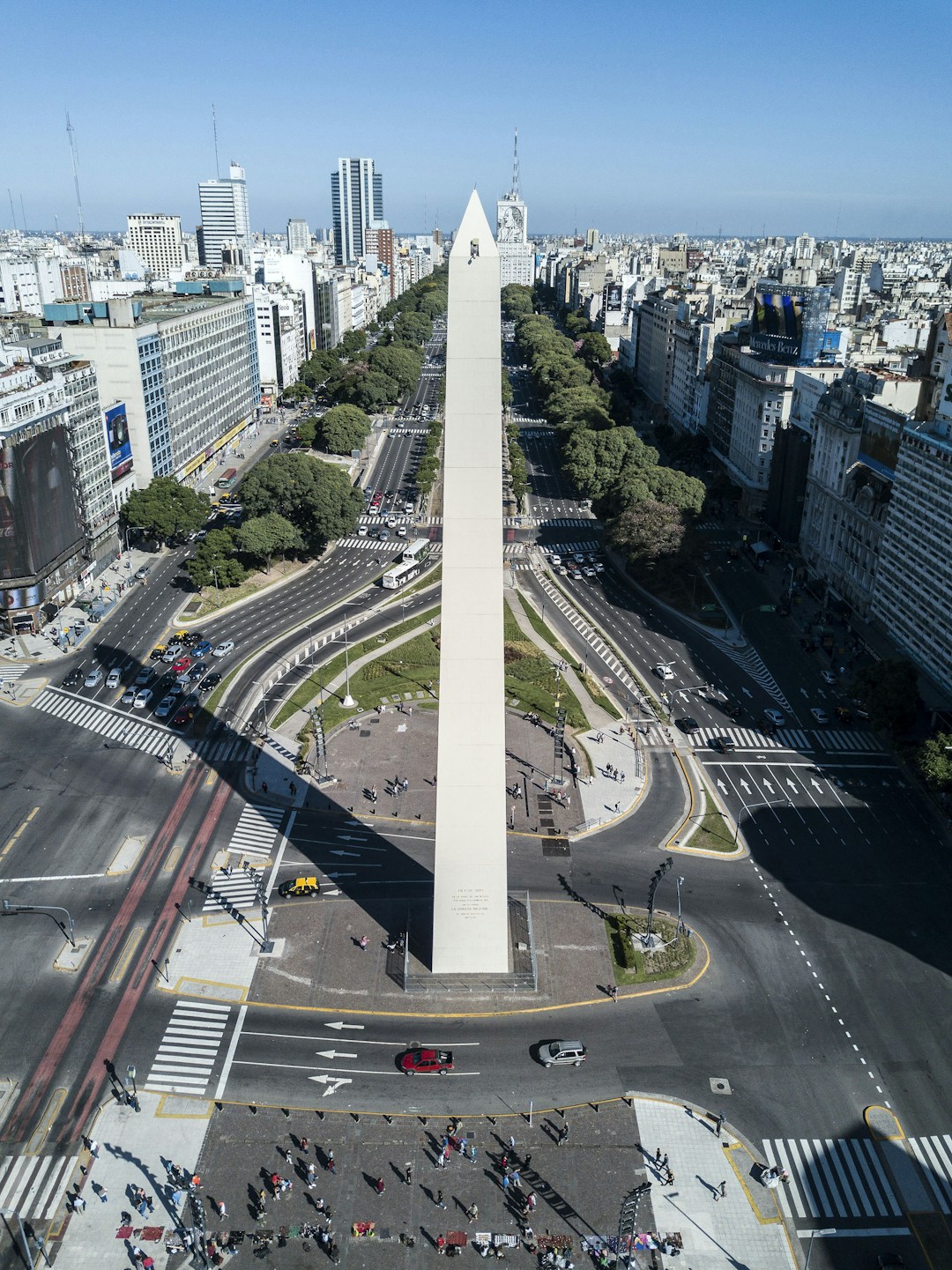
Photo by Barbara Zandoval on Unsplash
The Four Ways to Save in Dollars from Argentina
1. Official Dollar (Dolar Oficial)
The dolar oficial is the exchange rate set by the BCRA and offered through authorized banks and casas de cambio.
How it works. You visit your bank or an authorized exchange house, present your DNI, and buy dollars at the official rate. Historically, the government limited purchases to USD 200 per month under the “cepo cambiario,” Argentina’s capital controls.
Costs. Even when available, the official rate has been the most expensive in practice. Surcharges like the impuesto PAIS and other taxes at various points added 30% to 65% on top of the base rate. These levies have been modified under the Milei administration, but the effective cost has consistently been higher than parallel market alternatives.
Tradeoffs. Fully legal and transparent, but historically the worst exchange rate once taxes are factored in. Requires a bank account and formal tax status (CUIT/CUIL).
2. MEP Dollar (Dolar Bolsa)
The dolar MEP (Mercado Electronico de Pagos) is a legal way to acquire dollars through bond transactions on the Buenos Aires stock exchange.
How it works. You buy a dual-listed bond (such as AL30 or GD30) in pesos through an Argentine brokerage account, then sell that same bond in its dollar-denominated version. The price difference gives you an effective exchange rate (the “dolar MEP”) which typically sits between the official and blue rates.
Costs. Brokerage commissions range from 0.5% to 1.5%. The process takes 2-3 business days due to mandatory holding periods (parking).
Tradeoffs. Legal and market-driven, but requires a brokerage account, basic familiarity with bond markets, and patience. The CNV (Comision Nacional de Valores) has at various points imposed volume limits and restrictions.
3. Dolar Blue
The dolar blue is Argentina’s informal parallel exchange rate, a fixture of economic life that reflects what Argentines are actually willing to pay for dollars outside government controls.
How it works. You exchange pesos for dollar bills through informal money changers known as “cuevas” or “arbolitos.” The rate is published daily by outlets like Ambito Financiero and Infobae.
Costs. The blue rate itself is typically the most favorable, but the hidden costs are real: counterfeit bill risk, no receipt or legal protection, personal safety concerns when carrying cash, and the legal gray area of participating in the informal market.
Tradeoffs. Fast, accessible, and no paperwork. But high counterparty risk and zero consumer protection.
4. Digital Dollars
Digital dollars, specifically dollar-denominated digital assets like USDC and USDT, are the newest path, and one that has gained massive traction in Argentina.
How it works. You use a digital dollar wallet on your smartphone to hold dollar-denominated value. Each digital dollar is designed to maintain a 1:1 value with the US dollar, backed by reserves of cash and US Treasury bills. To convert pesos, you use a local exchange or peer-to-peer platform. For more detail, see what digital dollars are.
Costs. Wallet fees vary. The exchange rate you get on the peso-to-digital-dollar conversion depends on the on-ramp platform; most offer rates close to MEP or blue levels.
Tradeoffs. No bank account or brokerage needed, just a smartphone, which means you can effectively hold dollars without a US bank account. Available 24/7. You hold your own keys (learn about why your recovery phrase matters), meaning no institution can freeze your dollars. But digital dollars aren’t government-issued currency, carry issuer-specific risks (see are digital dollars safe?), and require you to manage your own wallet security. Understanding the difference between custodial and self-custody wallets matters before choosing a provider.
Comparing All Four Options
| Factor | Official Dollar | MEP Dollar | Dolar Blue | Digital Dollars |
|---|---|---|---|---|
| Exchange rate | Worst (with taxes) | Mid-range, market-driven | Best (usually) | Close to MEP/blue |
| Requirements | Bank, DNI, CUIT | Brokerage account | Cash, physical presence | Smartphone |
| Purchase limits | Historically capped | Some regulatory limits | None (practical limits) | None |
| Time to complete | Minutes (if available) | 2-3 business days | Minutes | Minutes |
| Legality | Fully legal | Fully legal | Gray area | Legal |
| Counterparty risk | Low (regulated bank) | Low (regulated broker) | High (informal) | Varies (issuer-dependent) |
| 24/7 availability | No (banking hours) | No (market hours) | Limited | Yes |
| Paper trail | Full | Full | None | On-chain record |
No single method is clearly superior. Each represents a different tradeoff between rate, risk, convenience, and legal clarity.
Why Digital Dollar Adoption Is Surging in Argentina
Argentina isn’t just a country where people want dollars. It’s become one of the world’s leading markets for digital dollar adoption.
According to the 2024 global adoption report from a leading digital asset analytics firm, Argentina ranked among the top 15 countries globally for adoption, with dollar-denominated digital assets as the dominant use case. Unlike many markets where speculation is the primary driver, Argentines are using digital dollars overwhelmingly as a savings tool, a practical way to preserve purchasing power outside the peso.
Reuters reported that Argentina leads Latin America in adoption of dollar-denominated digital assets, with local exchanges seeing peso-to-digital-dollar volumes grow significantly through 2024. The drivers are straightforward: triple-digit inflation, a history of capital controls, and a population comfortable with mobile technology.
The pattern mirrors what’s happened in other high-inflation economies. Argentina’s neighbor Nigeria has seen a similar surge in dollar savings through digital wallets, driven by the same combination of currency instability and mobile-first demographics. Across these markets, digital dollars are being adopted not as speculative assets but as practical savings instruments, a way to hold value that the local currency can’t preserve.
Photo by Eduardo Soares on Unsplash
A Real Scenario: Valeria in Cordoba
The following scenario is based on common patterns reported by Argentine freelancers and remote workers. It illustrates a typical use case, not a specific individual.
Valeria is a freelance translator in Cordoba who receives roughly USD 800 per month from clients in the US and Spain. For years, she converted every payment to pesos through a local transfer service, losing 4%-6% in fees and exchange rate markups each time. That’s roughly $32 to $48 per payment, or $384 to $576 per year on her $9,600 in annual freelance income. Worse, whatever pesos she managed to save lost purchasing power almost immediately. During 2024, her peso savings would have lost more than two-thirds of their value just sitting in her bank.
In mid-2024, Valeria started receiving payments directly into a digital dollar wallet. Her clients send dollars to her wallet address, and she keeps them as dollars until she needs to pay rent or groceries in pesos. She converts only what she needs, when she needs it, through a local exchange at rates close to the MEP.
The difference: roughly USD 480 per year in fees she no longer pays, plus she avoids holding pesos longer than necessary. Over her first eight months using this approach, Valeria kept an average of $2,400 in digital dollars at any given time. Money that would have lost roughly $1,600 in purchasing power had she held it in pesos during the same period. The dollars in her wallet are under her control. No bank, no brokerage, no waiting for market hours.
Getting Started
If you’re considering saving in dollars from Argentina, here’s how to start with a digital dollar wallet:
- Download Arca on your phone. Setup takes about 30 seconds. No bank account, brokerage, or US address required.
- Convert pesos to digital dollars. Use a local exchange or peer-to-peer platform to convert Argentine pesos at rates close to MEP or blue market levels.
- Hold dollars under your control. Your digital dollars sit in your wallet, secured by keys only you hold. No institution can freeze or block your access, a meaningful distinction in a country with a history of corralitos.
- Send or save on your terms. Keep your dollars as long as you want. Send to any compatible wallet in seconds.
What It Comes Down To
Argentina’s economic history has taught a hard lesson: the time to move savings into dollars is before the next devaluation, not during it. Whether you use the official channel, MEP, the blue market, or a digital dollar wallet, the important thing is making a deliberate, informed choice.
What’s changed is that you now have more options than ever. A smartphone and 30 seconds are enough to start holding dollars. No bank line, no cueva, no brokerage paperwork. For a deeper look at what protections now exist for digital dollar holders under US law, see our guide on the GENIUS Act.
With 211% inflation in 2024 and a peso that has lost 99% of its value since 2010, holding savings in pesos isn’t a neutral decision. It’s an active loss. The four methods above each have real tradeoffs, but doing nothing has consistently been the most expensive choice for Argentine savers.
Ready to hold your own dollars? Get started with Arca and set up your dollar wallet in 30 seconds.
Your dollar wallet. No bank needed.
Hold dollars, send them instantly, and manage your money on your terms.
Get started with ArcaRelated guides
Are Digital Dollars Safe? An Honest Look at Risks and Safeguards
Digital dollars carry real risks but also real safeguards. Understand reserve backing, regulation, depegging history, and how to evaluate safety before holding digital dollars.
How Digital Dollars Maintain Their Value: Understanding the Safety Behind the Peg
Learn how reserve-backed digital dollars like USDC and USDT maintain their $1 value through audited reserves, the GENIUS Act, and proper custody, plus lessons from past events.
Countries with the Highest Inflation Right Now
Data-driven list of countries with the highest inflation rates in 2026. See what drives rising prices, how citizens cope, and how to protect your purchasing power.